Best Automatic Pet Feeders 2026: 7 Picks Compared for Cats & Dogs
7 automatic pet feeders for 2026 compared on capacity, meal scheduling, food type and app fees — from PETLIBRO to Whisker. Find the right pick for your pet.
Top picks at a glance
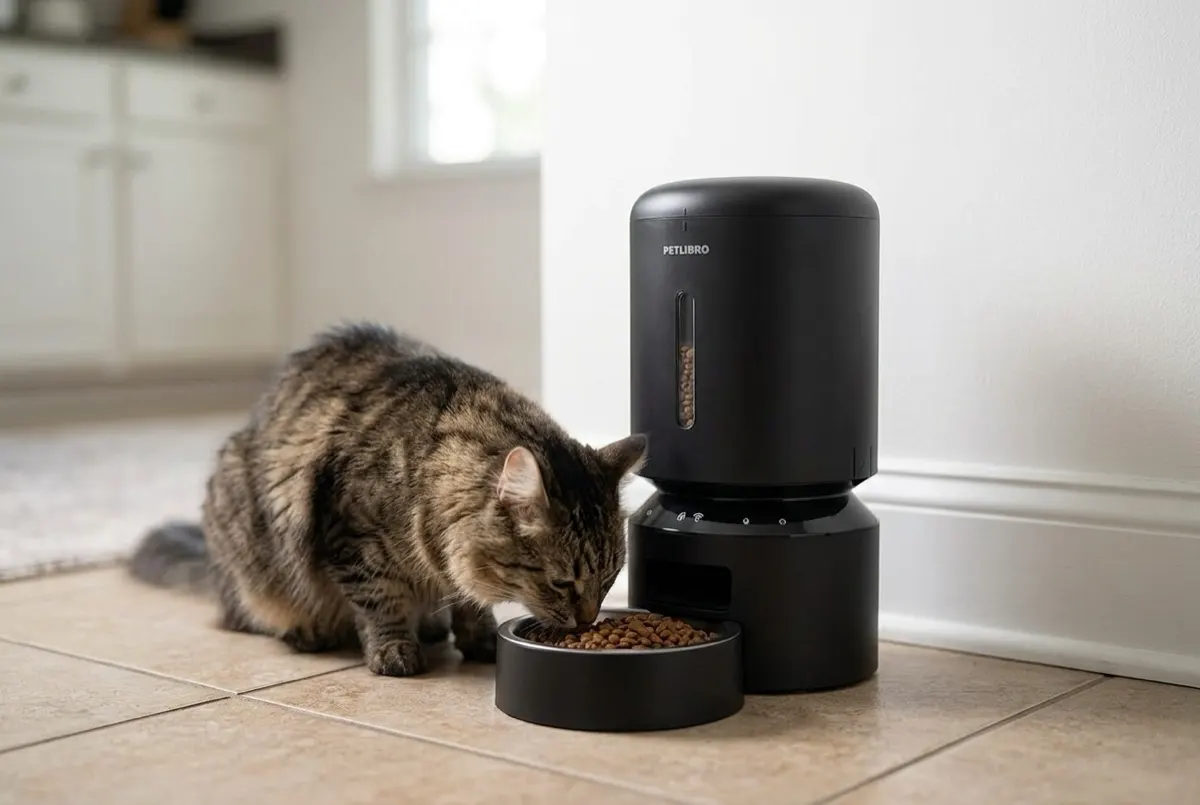
- Hopper capacity
- 5L

- Hopper capacity
- 24 cups (6 L)
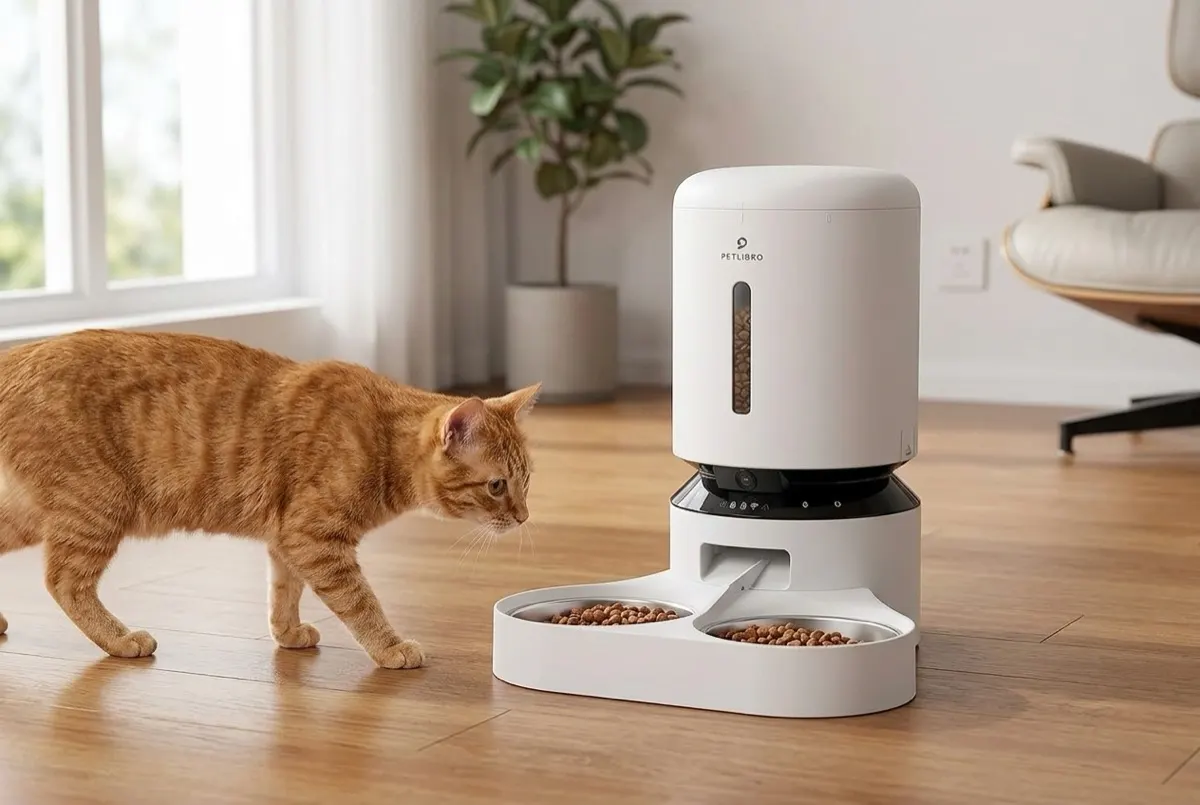
- Camera
- 1080p HD with night vision

- Hopper capacity
- 24 cups (about 6 L)
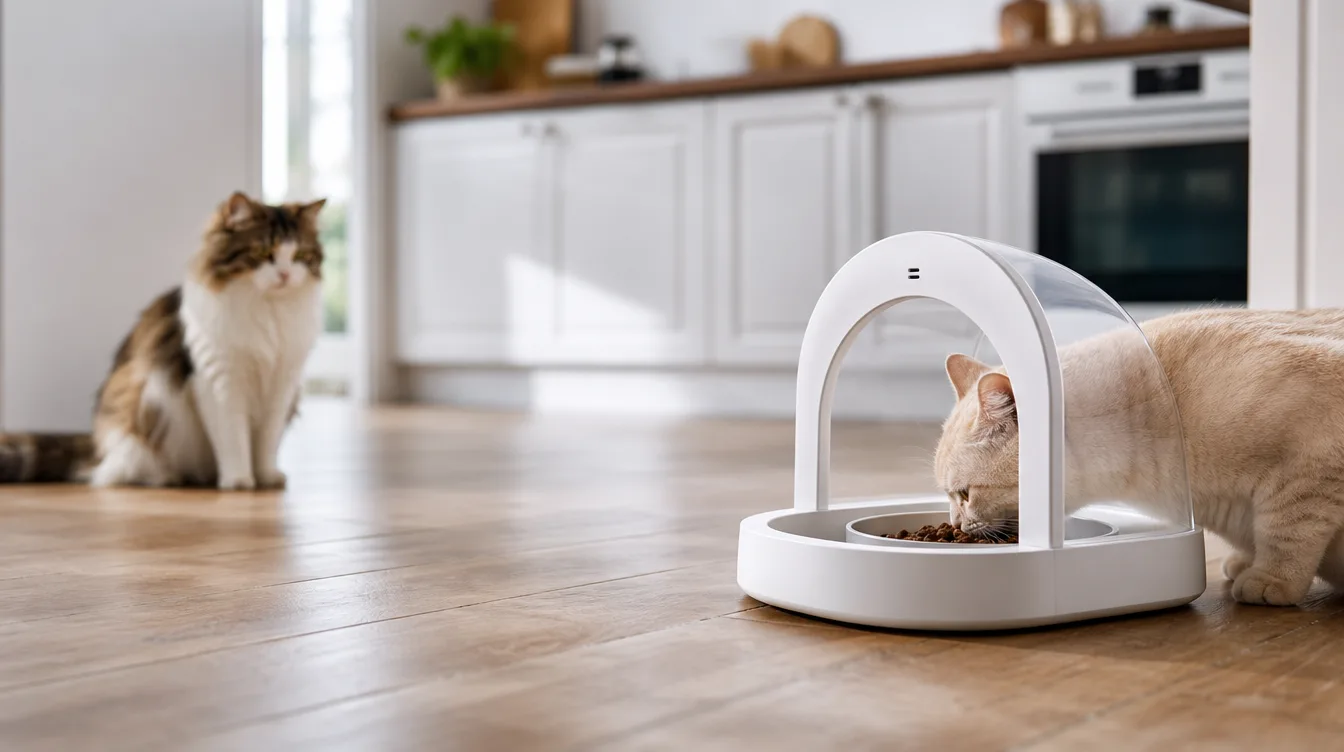
SureFeed Microchip Pet Feeder
Sure Petcare
- Bowl capacity
- 400 ml (13.5 fl oz), fits two wet-food pouches
How we evaluate products
We compare published manufacturer specifications, manuals, support policies, and relevant public guidance. We do not present unpublished laboratory or in-home measurements as our own testing.
Features and services can change, so confirm current details with the manufacturer before buying. Affiliate commissions do not determine our editorial criteria.
Last reviewed: 2026-10-06
Products covered in this guide

PETLIBRO
PETLIBRO Granary WiFi Automatic Feeder
- Hopper capacity
- 5L
- Connectivity
- 5G Wi-Fi (2.4GHz)
- Scheduling
- Up to 10 meals per day

PetSafe
PetSafe Smart Feed
- Hopper capacity
- 24 cups (6 L)
- Scheduling
- Up to 12 meals per day
- Portion size
- 1/8 cup to 4 cups per meal

PETLIBRO
PETLIBRO Automatic Feeder with Camera
- Camera
- 1080p HD with night vision
- Connectivity
- 5G Wi-Fi (2.4GHz)
- Audio
- Two-way talk

PetSafe
PetSafe Smart Feed with 2-Pet Meal Splitter
- Hopper capacity
- 24 cups (about 6 L)
- Bowls
- Two stainless steel, meal split equally
- Scheduling
- Up to 12 meals per day

Sure Petcare
SureFeed Microchip Pet Feeder
- Bowl capacity
- 400 ml (13.5 fl oz), fits two wet-food pouches
- Selective access
- Implanted microchip or RFID collar tag
- Pets stored
- Up to 32

Sure Petcare
SureFeed Microchip Pet Feeder Connect
- Selective access
- Implanted microchip or RFID collar tag
- Intake tracking
- Integrated scale, 1 g accuracy
- Bowl capacity
- 400 ml (13.5 fl oz)

Whisker
Whisker Feeder-Robot
- Hopper capacity
- Up to 32 cups (25 with insert)
- Portion control
- 1/8-cup increments, up to 1/2 cup
- Meals per day
- 1 to 8
The best automatic pet feeder for most cat homes in 2026 is the PETLIBRO Granary WiFi: a 5L hopper, up to ten daily meals in 1-50 portion steps, low-food alerts, and battery backup. Dog owners should pick the PetSafe Smart Feed, and homes where one pet steals another's food need the SureFeed microchip feeder instead.
An automatic feeder exists to hold a pet's feeding routine steady when a human schedule cannot. Cats and dogs do best on consistent amounts at consistent times, and that consistency is exactly what late shifts, early starts, and weekends away keep breaking. A good feeder delivers a measured portion on schedule whether or not the day cooperates, which is why it matters most for weight management, portion-controlled diets, and homes where mealtimes would otherwise drift.
Not every device marketed alongside feeders is actually one. A scheduled dry-food feeder dispenses meals; a treat-tossing camera dispenses enrichment; a microchip bowl guards access. Those are different jobs, so the right pick starts with the type of feeding you need rather than a single "best" product.
Choose the feeder type before the product
| Need | Feeder type | What to verify before buying |
|---|---|---|
| Scheduled dry meals for a cat or small dog | Programmable dry-food feeder | Hopper size, portion granularity, jam-resistant design, and power backup |
| Watch meals as well as schedule them | Dry-food feeder with camera | Camera resolution, night vision, two-way audio, and Wi-Fi stability |
| Stop one pet eating another's food | Microchip-selective bowl | Microchip or collar-tag compatibility, lid training mode, and battery life |
| Reward or engage a dog remotely | Treat-tossing camera | Treat capacity, compatible treat shape, and whether alerts need a plan |
The 7 feeders compared
| Feeder | Capacity | Programming | Food type | App and subscription |
|---|---|---|---|---|
| PETLIBRO Granary WiFi | 5L hopper | Up to 10 meals/day, 1-50 portions | Dry only | PETLIBRO app, 2.4GHz, no fee |
| PetSafe Smart Feed | 24 cups (6 L) | Up to 12 meals/day, 1/8 to 4 cups | Dry and semi-moist | PetSafe app, Alexa, no fee |
| PETLIBRO Feeder with Camera | 5L hopper | Programmable meals with portions | Dry only | PETLIBRO app plus camera, no fee |
| PetSafe Smart Feed 2-Pet | 24 cups, two bowls | Up to 12 meals/day, split equally | Dry and semi-moist, kibble to 1/2 in | PetSafe app, Alexa, no fee |
| SureFeed Microchip Feeder | 400 ml bowl | None, opens on the pet's chip | Wet or dry, filled by hand | No app, no hub, no fee |
| SureFeed Connect | 400 ml bowl | None, chip access plus scale | Wet or dry, filled by hand | Sure Petcare app via Hub, sold separately, no fee |
| Whisker Feeder-Robot | Up to 32 cups | 1-8 meals/day, 1/8-cup steps | Dry and semi-moist, kibble to 5/8 in | Whisker app, local schedule, no fee |
Published feature lists and service terms can change, so confirm the exact model and region before buying.
Best for cats: PETLIBRO Granary WiFi
The PETLIBRO Granary WiFi is the default pick for cat homes and the value option of the line-up: the PetSafe Smart Feed review notes PETLIBRO's aggressive pricing against the big-brand feeders. The 5L hopper covers multi-day scheduling, portions adjust in 1-50 steps across up to ten meals a day, a desiccant compartment keeps kibble dry, a low-food sensor warns before the hopper empties, and battery backup survives power cuts. The honest limits: dry food only, no camera, kibble that is too large or oddly shaped can bridge the chute, and the connected features need stable 2.4GHz Wi-Fi at the feeding spot.
Best for dogs: PetSafe Smart Feed
The PetSafe Smart Feed is the pick when the eater is a dog or the buyer wants a proven mainstream brand. Its 24-cup (6 L) hopper holds days of kibble, meals run up to twelve a day in portions from an eighth of a cup to four cups, and the conveyor mechanism resists the jams that plague paddle feeders. The Slow Feed option spreads a portion over about fifteen minutes for a gulper, and Alexa voice control triggers a snack from an Echo. It handles dry and semi-moist food only, and like every scheduled feeder it cannot stop a second pet stealing the portion.
Best for multi-pet homes: SureFeed Microchip Pet Feeder
The SureFeed Microchip Pet Feeder solves the problem no scheduled feeder can: food theft. A sealed lid stays shut until the registered pet's microchip or the included RFID collar tag is detected, then closes seconds after they leave. It stores up to 32 pet identities, runs about six months on C batteries with no hub, app, or subscription, and its 400 ml bowl takes wet or dry food, with a split bowl separating the two. Be clear about what it is not: you fill the bowl yourself, and it never dispenses on a timer. It is a guarded bowl, not a portion feeder.
Best for two pets on one schedule: PetSafe Smart Feed 2-Pet
The PetSafe Smart Feed with 2-Pet Meal Splitter turns one feeder into two bowls: a splitter divides every scheduled meal equally, with a privacy panel between the bowls to keep the peace. One 24-cup hopper, one schedule, and the Smart Feed's conveyor, Alexa control, and battery backup all carry over. The equal split is also the limit: both pets get the same portion at the same time, the splitter cannot identify pets, and a fast eater can still cross to the other bowl. Two pets on different diets need separate feeders or the SureFeed above.
Best for intake tracking: SureFeed Connect
The SureFeed Connect is the microchip feeder for homes that need data, not just access control. An integrated scale weighs food to within a gram, and because the lid identifies each pet by chip, the Sure Petcare app logs who ate, when, and how much, with a PDF export for a vet. That per-pet record is a real tool for prescription or weight-control diets and for catching an appetite drop early. Two caveats: the Sure Petcare Hub required for the app is sold separately, and like the standard SureFeed it is a selective bowl, not a timed dispenser.
Best premium set-and-forget: Whisker Feeder-Robot
The Whisker Feeder-Robot is the premium pick, carrying the build quality and app of the Litter-Robot 4 into feeding. The hopper holds up to 32 cups of kibble (25 with the insert), stretching refills into weeks, portions meter in eighth-cup steps across one to eight daily meals, and the schedule is stored locally so a Wi-Fi drop never means a missed meal. There is no subscription. The costs of that ambition: a premium price several times a basic feeder, dry and semi-moist food only with kibble to 5/8 inch, a 15-inch body that needs real clearance, and a backup battery sold separately.
Best for watching meals: PETLIBRO Automatic Feeder with Camera
The PETLIBRO Automatic Feeder with Camera is the monitor-at-the-bowl pick for owners who want to see a pet eat, not just trust that it did. A 1080p night-vision camera points at the food station, with two-way audio and motion and sound alerts flagging mealtime activity, on top of the same scheduling, low-food sensor, and battery backup as the Granary. It is sized for up to two cats, though one outlet cannot referee which cat eats which portion. If watching the whole room matters as much as feeding, the best pet cameras guide covers that category, and the Furbo 360 review explains where treat tossing fits.
Feeder criteria
A scheduled feeder should be judged first on reliability, because a feeder that jams or loses its schedule is worse than none at all. Check the hopper capacity against how long the feeder needs to run unattended, and favour fine portion steps so a vet-recommended daily amount can actually be dialled in. A low-food sensor and app alerts turn a device you must babysit into one that tells you when it needs attention, and a battery backup protects the schedule through a power cut. The dispensing mechanism matters too: any auger or paddle feeder can be bridged by kibble that is too large or oddly shaped, so match the food to the machine with small, uniform, dry pieces. A conveyor design, as on the PetSafe models, widens the range of kibble that dispenses cleanly.
Hygiene is the other axis. A detachable stainless steel bowl resists the bacterial film and odours that plastic accumulates and is gentler on cats prone to chin acne, and an easily cleaned hopper and chute keep the food it dispenses appealing.
Selective bowls answer a different question, so judge them on access rather than dispensing: microchip or tag compatibility, how many pets can be stored, a training mode for timid animals, lid delay, and battery life measured in months.
Camera feeders should be assessed as feeders first and cameras second, verifying resolution, night vision for pets that eat in the dark, and a stable connection, since a streaming camera leans harder on Wi-Fi than a simple schedule sync.
A transparent comparison process
Published specifications, manuals, support policies, and official app requirements provide the basis for these picks. Product claims are treated as manufacturer information unless an independent primary source is linked, and features, plans, and compatibility can change between regions, so the product page and support documentation remain the final check before purchase.
Important health limit
A feeder manages the mechanics of feeding, not the judgement behind it. The right daily amount, the right food, and any dietary restriction are decisions for the owner and a veterinarian; the device simply executes the plan consistently. Contact a veterinarian when a pet's appetite, weight, or eating behaviour changes.
Known limits and who should skip
Each pick has a documented boundary, and crossing categories is the most common buying mistake.
PETLIBRO Granary WiFi. Dry food only, no camera, and app features depend on a stable 2.4GHz connection; very large or oddly shaped kibble can bridge the chute.
PetSafe Smart Feed. Dry and semi-moist food only, happiest on mains power with the D-cells as backup, and it schedules portions without stopping a second pet stealing them.
PETLIBRO Automatic Feeder with Camera. The camera watches the bowl rather than the room, the unit is sized for up to two cats, and streaming leans hard on 2.4GHz Wi-Fi.
PetSafe Smart Feed 2-Pet. Every meal splits equally, both bowls share one schedule, and the privacy panel is a divider, not a lock.
SureFeed Microchip Pet Feeder. Not a scheduled portion feeder, it runs on disposable C batteries, needs a microchipped pet or the collar tag, and one unit guards one bowl.
SureFeed Connect. The Hub required for the app is sold separately, and without it the intake tracking, the whole reason to choose this model, stays dark.
Whisker Feeder-Robot. A premium price several times a basic feeder, dry and semi-moist only, a tall 15-inch body, and the backup battery is an extra purchase.
Owners whose real need is watching the whole room or tossing treats should go to the best pet cameras guide rather than asking a feeder to do a camera's job, and anyone shopping the Furbo should read it as a treat dispenser, not a meal feeder.
Sources and next steps
Read the PETLIBRO Granary WiFi feeder review, the PetSafe Smart Feed review, the PetSafe 2-Pet splitter review, the SureFeed microchip feeder review, the SureFeed Connect review, the Whisker Feeder-Robot review, and the PETLIBRO camera feeder review for the full picture of each pick. Continue with the best pet cameras guide if watching matters as much as feeding, and the Furbo 360 editorial review to understand where treat tossing fits.